Showing posts with label In-Game. Show all posts

Earthdawn 4th Edition timeline - Overview of recent events

Earthdawn 4th Edition timeline

Compared to Earthdawn 3rd Edition the timeline of Earthdawn 4th Edition continued and the Fall of Vivane is for example not the only event that offers new possibilities for adventures.

Overview of recent events

The following overviews (EN/GE) about the recent events of Earthdawn 4th edition, were created by the restless Elidis from the german Earthdawn community. I am as always proud to provide these over here for you:

Spoiler warning for Earthdawn 1st Edition players

The events from the campaigns "Prelude to War" and "Barsaive at War" are already part of the timeline because in Earthdawn 4th edition all these are in the past.

English

Earthdawn 4th Edition - timeline


German

Earthdawn 4th Edition - Zeitstrahl

Earthdawn supplement “Hidden Talents” released

Nico and his brother Claus present you their translation of the original german book “Verborgene Talente” they created in september 2012. The new book is called Hidden Talents.

“Hidden Talents“ is an unofficial supplement for the Earthdawn roleplaying system, from fans for fans. This volume contains a substantial collection of more than one hundred new talent knacks across all original disciplines. As a bonus feature, a new class of magical companion will be revealed!

Hidden talents

(mirror)

Magic in Earthdawn and the Mayan calendar

Some of you might immediately get the connection between magic in Earthdawn and the Mayan calendar. Nevertheless I want to give you a small insight on how the magical circle in the Earthdawn universe works and what this all got to do with the Mayan calendar.

So did you ever wonder why there is a Mayan calendar as a background on the 3rd edition sourcebooks covers?

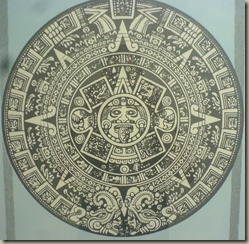
ed3_players_guide_previewMaya Calendar

That is because this calendar is strongly connected to the world and the age of Earthdawn, also known as the “Age of Legends”.

But to provide a complete overview we got to remember that Earthdawn is/was not alone since it was “invented” in 1992. It was Shadowrun that existed first and Earthdawn was intentionally developed as a preceding world of Shadowrun. Earthdawn plays in the same universe as Shadowrun but a long time earlier whereas Equinox is taking place a long time after Shadowrun. Depending on the level of magic, the world is formed and influenced differently. At a high magic cycle for example, horrors can enter the world.

The magic, in all those settings is in a permanent flow as the tides are. But the cycles of these “ups” and “downs” of magic are not measured in days, weeks or months……..guess it…….yes they are measured in “Ages” and that’s the point where the Mayan calendar comes into play.

The Mayan calendar works this way*:

Short Count calendar: The Short Count was used for measuring short periods of time. It consisted of 260 days, divided into 13 periods (20 days each).

Long Count calendar: The Long Count calendar was used mainly for measuring longer periods of time and events that happened a very long time ago, or will happen very far into the future.

Maybe a this video explains the functional principle of the Mayan calendar better.

* the Mayan calendar works in a more complex way as I described here. For more have a look at wikipedia or at howstuffworks.

Flow of magic and the magic level

Strongly connected to the Ages is the magic flow and for Earthdawn this had tremendous consequences. Earthdawn, the 4th age, the Age of Legends or the 4th world (as some Shadowrunners call this age) has to deal with the rise and fall of the magic level. The rise of magic allowed horrors to enter the world at the peak of the magic level (and even before). The scourge started and the horrors “ruled” the earth and the Namegivers hid from the world. After 300 to 400 years (to be exact in 1415 Throalic time = TH) the level of magic stopped to decrease. Look at “In-game measuring of the magic level” to read about how the Namegivers knew that magic stopped decreasing.

Real time of Earthdawn and Shadowrun

Some of you might already see what you can do when you got a “real-time” calendar and fictional magic levels that depend on the system of that calendar. Exactly, you could calculate the real time dates of Earthdawns, Shadowruns and Equinox’ ages:

The Mayan calendar starts at the 11th August 3114 BC and one cycle of the Mayan calendar takes about 5200 years. That’s why a lot of doomsters and conspiracy theorists predict the end of our world as we know it for the 21st or 23rd December 2012, when the long term cycle of the Mayan calendar ends. Which is also called the 2012 phenomenon.

This means for Earthdawn that we can almost exactly date back to the start of the plague or get the real time dates of the Throalic timetable.

Let’s see if I get it right here:

The Sixth World (Shadowrun) starts on December 23rd 2012, with a rise of magic. Dating back to the end of the 5th World we land at 3114 BC, the start of the Mayan calendar. The plague in Earthdawn started when the level of magic was at its peak: ∼5200 : 2 = 2600 –> 3114+2600 = ∼5714 BC. The Namegivers hid for about ∼450 years (for example Throal was closed from 1050 TH until 1420 TH) in their Kaers, so we subtract 450 years from 5714 BC = 5264 BC. The opening of the Throal gates in 1420 TH would be equal to the real time date of ∼5264 BC.

NOTE: All that subtracting/dividing of numbers and so on is based on rounded, not exact dates. I just want to provide a calculation that is easier to understand.

Overview of the Ages and their magical level (↑,↓):

↓ The Age of Night

↑ The Age of Dragons

↑ The Age of Legends (Earthdawn)

↓ 5th World (current age)

↑ The Sixths World (Shadowrun)

↑ The Eights World (Equinox)

And again a picture or a graphic says more than a thousand words

ed-sr-en-zeitstrahl-2

(thx to taysal)

In-game measuring of the magic level

Between the Age of Dragons, Age of Legends and the Sixth World was a long time of a down cycle when magic decreased. The magic in Earthdawn for example reached its peak at the time of the scourge. Often questioned in some forums: “How were the Namegivers in Earthdawn able to find out when the scourge ended?”. They had something that was called the “Elemental Clock” or “Dish of Water”. This device allowed to see if the magic level had dropped.

Description of the Elemental Clock in Classic Edition:

During the Scourge, kaers with copies of the Book of Tomorrow knew to place a ball of True earth over a bowl of True water, so that when the two touched and turned to mud they’d know the level of magic in the world had fallen low enough to end the Scourge. Well, we all know the level of magic has held steady at just above that mark, and even we Elementalists don’t completely understand why. (EPC p. 93, Classic Edition)


The Third Edition Gamemaster’s Guide states the following about the device that the Namegivers used to see if the magical level had decreased enough:

Those kaers that hold copies of the Throalic Book of Tomorrow know the magic ritual that will tell them when they may safely re-enter the world. Those lacking this ritual must guess and hope. The magic itself is basic: a simple ball of True earth is enchanted and placed over a dish of True water. The magics of the ritual keep the ball suspended over the water. As the strength of the world’s magical aura wanes, and the Horrors are forced to retreat, the ball of True earth descends until it finally touches the True water and the two mix.
All across Barsaive, the people in the kaers watch the ball descend. Slowly, ever so slowly, it drops toward the water. Finally, in the fourteen hundred and fifteenth year of the Throalic Calendar the ball stops falling, hanging an inch above water. Shocked scholars and magicians watch in wonder and dread. It is too soon by hundreds of years for the Scourge to have abated. And why had the ball stopped? No one knew the answer then, and no one knows to this day.

A lot of tales and myths are told amongst fans, developers and I guess even most magicians of Barsaive, speculating about that weird issue. Forum discussions can be found here.


Conclusion

This article provides just a small insight into the discussions about the Ages, the Mayan calendar and the magic flow of those RPGs. For all those who are interested in more of that topic and want to read which theories others came up with, have a look at these pages or forum discussions:


Unfortunately is the Ancientfiles.com offline, the page with the best Earthdawn – Shadowrun crossover information. So if anybody saved some information of Ancientfiles.com, please contact me. But as Drucifer told me there is a way back in time: http://web.archive.org/web/20101108175546/http://ancientfiles.dumpshock.com/

Glennwood Deep

imageWell, well, well. Recently a forum post, over at the Myrias.de (German) caught my attention. Eirynhawk posted a description of a territory of Barsaive which is almost unknown. The description of the Glennwood Deep is very well done by Eirynhawk and I thought that it would be great to share the description of the Glennwood Deep with the international community. The well illustrated description is now available as an English PDF. It is yet “only” an unfinished description which provides enough characterization of the territory but let’s gamemasters pick up some of the basic ideas what kind of treasures, tribes and adventures the Glennwood Deep offer for a nice adventure set up.

So there is more to come (Chosen, Shadow wolves), but don’t hesitate to add your ideas and your own enhancements to this description of the Glennwood Deep. Please add your ideas, critics and thoughts about this description to the comments.

English PDF File: Glennwood Deep – by Eirynhawk (Mirror)

Roleplaying Music

When you're a gamemaster and you want to use music in your campaign, first of all: Make a good selection.

On the one hand, using music, you can create a special mood for every situation. On the other hand, if the music doesn't match, it disturbs the flow of the game and destroys the mood you wanted to create.

So you got to select music and listen and feel what kind a mood it creates.

A very useful source for roleplay music are the CD's of ERDENSTERN. They are professionally produced for roleplaying games. Erdenstein already produced several CD's like Into the Green, Into the Red, Into the Blue, Into the Dark or  Into the Gold. Each one is about a specific topic, for example the CD "Into the dark" covers sinister, dark and fearful sounds.


You can download some excerpts for free from their page


All of the CD's are very useful, if you decide to enrich your game with music.

Another source for rolegame music are of course soundtracks from several fantasy movies like "Conan the Barbarian/Destroyer" Conan the Barbarian - Anvil of Crom Conan the Destroyer - Battle Song, "Willow" and "Gladiator". But also computer games offer a rich database to include music into your game.

But as I tried to point out in the beginning, you shouldn't just click PLAY and let the music echo in the back. Find the right point to turn up the volume and create a room full of darkness and fear.

Throalic coins

A long time ago I discovered a picture of throalic gold, silver and copper coins. I tried to find out who painted those nice coins, but unfortunately I didn't find the webpage anymore, where I downloaded this picture. So if the producer of this picture is out there, please leave a comment or contact me.


The front of the gold coin shows Braza and the back shows a slave with a halo and bursted chains. These coins are often called "Braza" or "Doublesider". I had a look at the EDPC and one-fifth of an ounce is listed there as weight for the gold coin (80 coins to the pound). For european players: one gold piece weights 6.25 g or choose 6 gramm for better calculation.
The silver coin shows on front a portrait of Tav Korelsed and the Council Compact is on its backside, its nicknames are "Tavs" or "Books". The weight of one piece of silver is one quater of an ounce (64 coins to the pound). Again the conversion into the metric system = 7.8 g => 8g.
The copper coin shows on both sides hammer and pickax, they are also called "Hammer" or "Builder". It weights a third of an ounce each. (48 coins to the pound) 10 g in metric system.

I think this is a good tool to show your players, what kind of coins they deal with, when they shake their purse.

If you really want to improve the way your players are dealing with money then have a look at THIS webpage.


Dice Games Pt.2

Shock, an Orc dice game.

„The second and maybe the last report of Eran Rockfinch has reached the library“
Merrox, Master of the Hall of Records

„SHOOOOOK OUT !!!!!!“
Kret’chog Steelthought Orc Cavalryman, winning the game.


I am proud to present the library another dice game, mostly played by Orcs.

I was travelling with a caravan to Travar. The merchant that traded with herbs, had payed three Orc soldiers to protect his goods. Every evening at the camp fire, those three soldiers started to play dices until all members of the caravan went to sleep and they started their guard.

One evening I ate near them to watch what kind of dice game they played. Suddenly one of them (Koltrag Stonetooth) recognized me, jumped up immediately and started to shout at me. I am able to understand their language and replied him that I am surely not the source for Kret’chogs luck. But Koltrag didn’t believe me, so I had to eat alone this evening.

The next evening I started to tell the children one of the most famous Orc stories. Kret’chog Steelthought suddenly screamed that I should speak up, so that he also could listen to my story while playing their game. This evening I told a lot orcish stories and sang one song for the children when they had to go to sleep. I also went to sleep and heard that the soldiers began their surveillance.

The following evenings I was able to convince Koltrag that I can’t bring luck to Kret’chog and so they allowed me to sing a few songs beside them, watching them play.

Finally I learned the rules of the game called „Shock“ and now let me tell you how it is played by most Orcs:

The game is divided in two rounds. In the prelude 13 coins or stones or whatever is used will be spread at the losing players from a pot. In the final round all the stones or coins have to be played at one person, the loser.

Three dices are used and the player to start has three attempts to roll the dices. All the other players after him are allowed to throw the dices as often as the beginner did. The starter is free to choose how often he rolls the dices and even which dices he rolls again.

At the end of the round the player with the worst result receives a number of coins from the pot as given by the result table (see below). The one who lost the round will start the next round.

When all the coins are given out after several rounds, the final starts. The difference between the prelude and the final is the spread of the coins. The player with the best result is allowed to give the player with the worst result coins. How many see below. If you run out of coins you’re out of the final and can’t loose any more. The loser will be the person that received all the coins at the end. There are no winners, only a loser.

I had to watch two evenings until all the results appeared and their value had been mentioned.

There exist four kinds of results:

Shocks: two aces and another number
Thundras: three times the same number
Pathes: three numbers in a row: 3,4,5 and so on
Everything else that is no Shock, Thundra nor Path is seen as the number it represents. For example you throw 6,1,3 it counted as a 631. The highest number represents hundred, second highest tenner and third ones.

The number of coins that every result represents:

Shocks: for shocks the third number decides how many coins you’ll receive or you’ll get rid of.
Shock and two: 1, 1, 2 -> two coins
Shock and three: 1, 1, 3 -> three coins
Shock and four: 1, 1, 4 -> four coins
Shock and five: 1, 1 5 -> five coins
Shock and six: 1, 1, 6 -> six coins

All Thundras represent three coins

All Pathes represent two coins

If a player wins with something else than the results mentioned one coin is moved.

Shock out

If you throw a 1, 1, 1 all your coins will be removed and you can’t loose anymore. If you throw the Shock out at the prelude all the remaining coins will be given to the loser of the actual round.

Special rules

Kretchog told me that there exist special rules that are used by some orcs, that play this game, they (Kretchog, Koltrag and Muron) also use them. If you throw two 6, you’re allowed to turn one of them into a 1, but you’ll have to roll the other 6 again. If you throw three 6, you can turn two of them into 1 but the third must be rolled again. That means if you throw three 6ers with your third try you’re not allowed to turn them into one because you can’t roll the third any more.

I’ll give you an example of a round we played:

Kretchog, Koltrag and me played, Muron was watching the camp.
Kretchog starts and rolls 6,5,2. He says its enough and passes the dices to me. I throw 3,4,5 and laugh, that means I’ll get rid of my last two coins with the Thundra. Koltrag has also one try to throw over my Thundra. He rolls and shouts Shoock 4, damn it. I see 1, 1, 4 with one throw! Koltrag gives Kretchog four coins and has one left. I got two left and Kretchog has 10 coins.

Next round Kretchog starts again he rolls three times and at the end he has a Shock 3. Koltrag who lost this round receives 3 coins.

Koltrag starts and throws first 6,5,2. He puts the 2 and the 5 back. Rolls again and has a 6 and a 1. For his third throw he takes one 6 back and rolls with full risk. The dice shows a 1 and Koltrag screams SHOOOCK 6. I see 1, 1, 6. Damn that Orc.

I start, at the end of my third throw I see Shock 6, not enough. Kretchog told me one evening, that „WIT(h) is SHIT“.

Kretchog's turn, he throws at his first throw 6, 6 , 3. He turns one of the two 6 into 1 and rolls the six and the three again. 1, 4.... Shock 4 not enough, but one throw left. He rolls long and serious, mumbles into his beard and rolls the dice.......................
SHOOOOOOOCK OUT (1, 1, 1)...............................................then Murons head landed in the camp fire.......................

Dice Games Pt.1

I translated the following report about a dice game from German into English. It was originally posted on the website of Zeitalter der Legenden. All the German readers can find the original German version over HERE.

Doubling

„From a report of Eran Rockfinch travelling Troubadour and Adventurer“
Merrox, Master of the Hall of Records

Everywhere in Barsaive you’ll always find pubs and taverns where dubious players are gambling for silver and even more. So let me tell you of a game named „Doubling“. It was back then in Jerris, when I was sitting beside the fire and was watching two adventurers, playing dices at a small table. One of them was an ordinary human, which clothes had seen better days. The other player was a dwarf, kinda tall for its race.

Each of them threw one dice, the human starting first. He was the „Caller“, how I found out later, whereas his bearded companion had the role of the „Doubler“.

The „Caller“ throws first and then the „Doubler“ has to throw the same number like the „Caller“. He has as many attempts like the number of the „Caller“ showed.
Example: The dwarf has thrown a 3, so the human has three attempts to throw a 3 too.

Is the „Doubling“ successful, the „Doubler“ receives the stake and the roles are switched. If the „Doubler“ is not successful, the pool goes to the „Caller“ who also starts again.

That was the way those two were playing a while, their bets varied each round and the dwarf had to take out silver pieces several times. The stack of the human was growing and growing.

They recognized my interest and the silent human offered me a seat to join them. He told me that „Doubling“ can also be played in groups. I wanted to decline the offer as I thought of being short of cash, but it could also become more than less. So I joined them.

The rules for multiple players are extended. If two or more players are able to „Double“, then the player with the fewest attempts wins. Is this amount also the same, the stack stays in the pot and a new round starts.

After a few hours of playing I can dissuade everybody from playing „Doubling“. I lost my whole travel silver, the dices didn’t want to role my way. Perhaps it was the table that always shook when the silent human was „Calling“ and throwing a 1. Unfortunately I realized that the next day........

„Little dice bring good luck and get fast my silver back!“
Wibbles Windling Troubadour

powered by Blogger | WordPress by Newwpthemes | Converted by BloggerTheme
